

Limitations on Color Matching & Special Finishes for Custom Mugs
When creating custom mugs for your brand, event, or personal use, understanding the boundaries of color matching and special finishes is crucial to ensure your vision translates perfectly into the final product. At Tairflask, we’re committed to transparency about customization capabilities—here’s what you need to know about potential limitations and how we navigate them.
1. Material - Driven Color & Finish Constraints
Custom mugs are crafted from various materials (ceramic, stainless steel, glass, or plastic), and each material interacts differently with coloring and finishing processes:
- Ceramic Mugs: Traditional ceramic mugs excel with sublimation printing or enamel - based coloring. However, highly metallic or neon hues may appear muted, and matte finishes can limit color vibrancy (as matte coatings diffuse light).
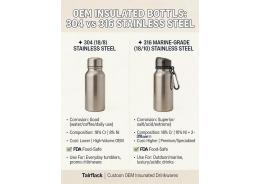
- Stainless Steel Mugs: Stainless steel’s reflective surface restricts direct paint application. We often use powder coating for base colors, but “color matching” to Pantone shades depends on the coating’s thickness and metal’s underlying sheen. Metallic finishes (e.g., rose gold, gunmetal) are achievable, but exact matches to non - metallic references (like a fabric swatch) are rare.
- Plastic Mugs: Food - safe regulations limit the types of pigments used. Neon or fluorescent colors may require special (and more costly) UV - stable inks, and textured plastic surfaces (like ribbed designs) can cause uneven finish application.
2. Process - Specific Limitations
Different finishing techniques (sublimation, screen printing, laser engraving, or electroplating) have inherent limitations:
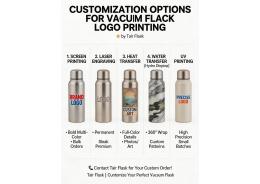
- Screen Printing: Best for solid, bold colors. Gradients or ultra - fine color transitions (e.g., a watercolor effect) are challenging, as each color layer requires a separate screen. Small text or intricate patterns may blur with certain finishes (like glossy overcoats).
- Sublimation Printing: Ideal for full - color, photo - realistic designs, but it requires light - colored backgrounds on ceramic or polyester - coated surfaces. Dark or black mugs can’t use standard sublimation (though “white toner” alternatives exist, they add cost and slight color shifts).
- Special Finishes (Matte, Glossy, Metallic, Textured):
- Matte finishes: May “flatten” vibrant colors, and intricate designs with fine lines can get lost in the matte texture.
- Metallic finishes (e.g., gold foil, chrome plating): These are best for accent details (logos, borders) rather than full - body coverage. Full metallic mugs can’t replicate exact Pantone shades due to the reflective nature of the coating.
- Textured finishes (like hammered metal or embossed ceramic): Limit detailed color matching, as texture disrupts uniform pigment application.
3. Color Matching: From Swatches to Reality
While we strive to match Pantone, RGB, or CMYK references, factors like:
- Screen/device calibration (your digital proof vs. physical product)
- Material’s base color (e.g., a white ceramic mug vs. a black stainless steel tumbler)
- Finish type (glossy vs. matte)
mean a 100% exact match isn’t always feasible. For critical color accuracy, we recommend ordering a pre - production sample to approve the color/finish before full production.
4. Minimum Order Quantities (MOQs) for Special Finishes
Elaborate finishes (like hand - painted details, metallic foiling, or custom matte coatings) often require higher MOQs to justify setup costs. For example:
- Metallic gold foiling on ceramic mugs may have an MOQ of 100+ units (due to manual application steps).
- Custom textured finishes (e.g., a “speckled” or “marbled” effect) require bulk production to optimize process efficiency.
Smaller orders (e.g., 20–50 units) may be limited to standard finishes (glossy, basic matte) or simplified color palettes.
5. Design Complexity & Fine Details
Intricate designs with tiny text, complex gradients, or multi - layered finishes face challenges:
- Small text (smaller than 6pt) can become illegible with textured or matte finishes (as the surface texture distorts fine lines).
- Multi - color gradients (e.g., a sunset - inspired design) may require simplification for screen printing, or additional costs for advanced sublimation techniques.
- 3D embossing or debossing (a special finish) limits color application to the raised/lowered areas, so full - color coverage on embossed surfaces isn’t possible.
How Tairflask Helps You Overcome Limitations
Our team works proactively to turn constraints into creative solutions:
- Free Design Consultations: Share your vision, and we’ll recommend materials, finishes, and color palettes that work (e.g., switching to a glossy ceramic mug for neon hues).
- Pre - Production Samples: Order a single sample to test color accuracy and finish before committing to bulk production.
- Alternative Techniques: If a metallic finish is non - negotiable but MOQs are too high, we may suggest metallic inks (for lower quantities) or foil stamping for logos only.
Ready to bring your custom mug idea to life? Reach out to discuss your project—we’ll guide you through color and finish options to achieve your goals, within feasible boundaries.



 English
 German
 French
 Russian
 Spanish
 Japanese
 Korean
 Portuguese
 Ukrainian
 Arabic
 Italian


